Showing posts with label growingpost. Show all posts

Monday, April 12, 2010

Nadine's fraction growing post


page 202


4 a.)


answer: 4 x 1/3=4/3


b.)


answer: 2/5+2/5+2/5= 1 1/5


page 203


7. a.)3x1/8=(1/8+1/8+1/8)= 3/8


b.)6x1/4=(1/4+1/4+1/4+1/4+1/4+1/4)=6/4


c.)2x6/5=(6/5+6/5)=12/5


d.)2x4/3=(4/3+4/3)=8/3


page 209


12.)It takes 4/5 of a roll of ribbon to wrap six packages. What fraction of a roll does it take to wrap three packages?


-It takes 4/15 to wrap three packages.

4/5 divided by 3 = 4/15


part 2


Friday, April 9, 2010

Jennifer's Fraction Growing Post :D

Hello Everyone!


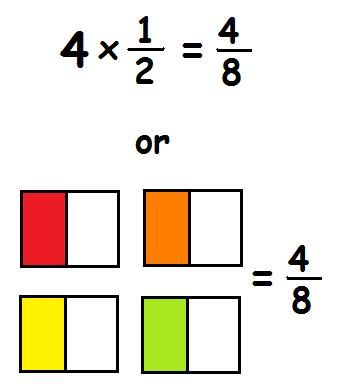
There is two ways to show how to multiply a fraction by a whole number. One way is to draw a picture or just straight multiplying. Multiply the top then the bottom which gives you the answer. Or I draw a fraction strip to help me solve the answer. The picture below explains both ways. The question example I will show will be in the math textbook page 202 question 6A.

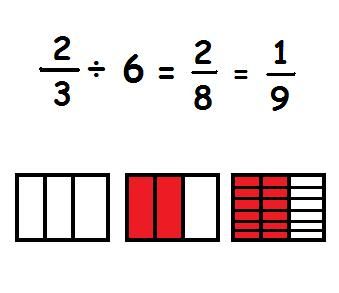
Next, I'm going to show you how to divide a fraction! The easiest way for me to divide a fraction is do draw a fraction strip. The question I am going to use for this diagram will be in the math textbook page 208, question 5D. The Diagram shows how I did it step by step to get the answer.

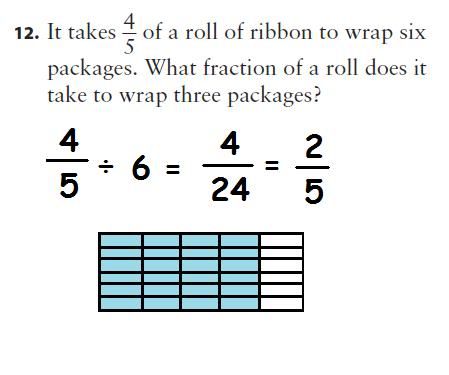
Next, I'll show you how I solve a word problem using fractions I'm going to use Question 12 for this :D


Part Two!

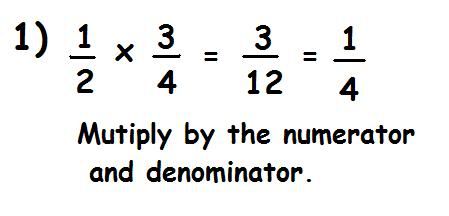
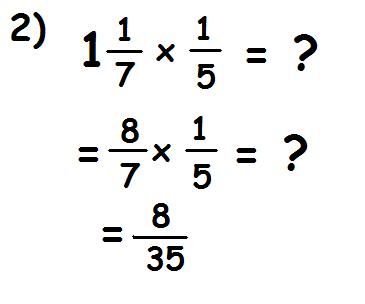
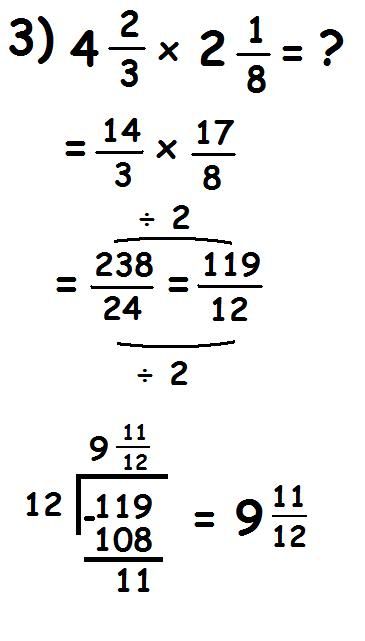
For part two, I have to show that I understand how to multiply which is very easy. I have to have a fraction multiplied by fraction, fraction multiply by mixed number. and Mixed number multiply by Mixed number.

For the second one, in order for me to solve it, I have to change the mixed number into a improper fraction. By multiplying the denominator by the whole number then add the numerator. Which gives my an improper fraction. From there, I just do the same thing as question one. If my answer turns out as a proper fraction, no need for me to change it to a mixed number.

And for the third one, It's like putting all your work together but, the only thing will be new is converting an improper fraction to a proper fraction. Which is easy, The numerator has to go in the box while the denominator has to stay outside the box. It's like doing long division. When I get a remaining, I use that for my answer.

PART THREE!
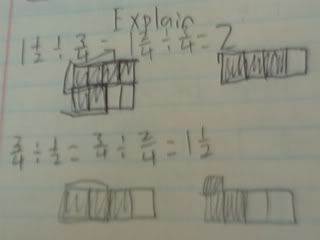
The image below represents diving fractions with mixed numbers. First of all I have to find the common denominator that matches with the number am diving once that's done, I draw a fraction strip so that would help me represent my mixed number or fraction. What is my statement is that "How many groups of 1 3/4 goes in 2/4?" Something like that I don't really need to care about the denominator at the end. I just need to keep an eye on the numerator. That will lead me to my answer :]


Thanks for reading my post!

Saturday, April 3, 2010

Fractions By: Laura

Hi everybody! Happy Easter! Hope everyone had an awesome spring break!

Here is my fractions video :)
http://www.ustream.tv/recorded/5703295

Sorry...Brianna and I were very hyper that day. But we got the message across. Now let's do some more questions!
Determine the product using 2 different methods:
4 x 1/2

The simplest way to solve this (in my opinion) is to change the whole number into a fraction and then just multiply. To change any whole number into a fraction all you have to do is put 1 as your denominator.

Our new equation:
4/1 x 1/2

Now we multiply the numerators by each other, and the denominators by each other.
4 x 1 =4
1 x 2= 2

Our product is now 4/2. To simplify you divide the numerator by the denominator.

4 divided by 2=2
The final product is 2.

Another way to solve this problem is by using diagrams/pictures.

We started out by representing 4 1/2s because that is what the equation is. Then, by adding them together we get the finished product of 4/2 -or- 2.

Now that we have covered multiplication, let's move on to division!


1/4 divided by 2:


As you can see, we started with 1/4. Then, we divided the entire rectangle in two. Now, we pick one to finish the division. That gives us 1/8.

Now, let's try out what we have learned with a word problem. :)


The ares of Manitoba, Saskatchewan, and Alberta are the same. The sum of their areas is 1/5 the area of Canada. Express the area of these provinces as a fraction of the area of Canada.


In order to figure this out, we have to divide 1/5 of the area of Canada by 3 provinces. -OR- 1/5 divided by 3.


Each province is 1/15 of the area of Canada.


PART 2:


A fraction multiplied by a fraction:


You multiply the numerators to get the numerator and the denominators to get the denominator. Pretty simple.


A fraction multiplied by a mixed number:


First you have to change the mixed number into a fraction by multiplying the whole number by the denominator, then adding the numerator to that number. Then that number becomes your numerator and you keep the same denominator. Then you multiply those fractions and you get your answer.


A mixed number multiplied by a mixed number:


OK, so you already know how to change a mixed number into an improper fraction. (WN x d + n) So that's the same method you use for determining the product of a mixed number by a mixed number. You change them both into improper fractions and then multiply. Then, from there you change the improper fraction into a mixed number by dividing the numerator by the denominator and using the remainder as your fraction.


1 3/7 x 3 2/5


1 x 7 = 7


7 + 3 = 10


Improper fraction = 10/ 7


3 x 5 =15


15 + 2 = 17


Improper fraction = 17/ 5


New question:


10/7 x 17/5


10 x 17 = 170


7 x 5 = 35


PRODUCT: 170/35


170 divided by 35 = 4 6/7


PART 3:


Explain:


1 1/2 divided by 3/4


First we have to find a COMMON DENOMINATOR for each fraction. In other words, we have to find a number that 2 and 4 go into evenly, preferably the SMALLEST COMMON DENOMINATOR. The smallest common denominator of 1 1/2 and 3/4 is 4. This means that we change 1 1/2 to 1 2/4 and keep 3/4 the same. Now we divide by figuring out how many times 3/4 goes into 1 2/4.


The answer is 2.


3/4 divided by 1/2.


Again, we have to find the LOWEST COMMON DENOMINATOR, which we already know is 4. Therefore we turn 1/2 into 2/4 and leave 3/4 the same. Now our job is to find out how many times 2/4 goes into 3/4.


Our answer is 1 1/2. Our denominator changed because when we started to divide, our whole changed from quarters to halves.


~Laura Kathleen~

Thursday, March 25, 2010

surface area growing post danielle


Deniel's surface area growing post

Okay guys here is my surface area growing post about right rectangular prism, right triangles, and cylinders

Here is my first surface area question:
Okay here is what I did:

front:
13.5 cm x 18.5cm =area 13.5 x 18.5= 249.75cm x 2 = 499.5cm
side:
5 cm x 13.5cm =area 13.5 x 5= 67.5cm x 2 = 135cm
length:
18.5 cm x 5cm =area 18.5 x 5= 92.5cm x 2= 185cm

499.5+135+185= 819.5
Area= 819.5cm

Here is my second question:
Okay so here's what I did:

A= l x w A= (b x h) / 2
A= 9 x 3 A=(3 x 2.6) / 2
A= 27 The area on one rectangle is 27m A=7.8 / 2
A=3.9 and its the area of one triangle

Surface Area= (3 x rectangle) + (2 x area of triangle)
= (3 x 27) + (2 x 3.9)
= 81 + 7.8
= 88.8
So the surface area is 88.8 centimetre squared.

Here's my third question:
Here's what I did:
Determine the radius of each circle:
7.5 / 2 = 3.75 so 3.75 is the radius of each circle

Find the area of the circle
A=π x r2
A=3.14 x 3.75 x 2
A= 44.15625 so the area of one circle is 44.15625 x 2 = 88.3125 for both circles.

Find the area of the rectangle using the circumference of the circle.
A= l x w
A=(π × d) × w
A= 3.14 × 7.5 × 11
A= 259.05
The area of the rectangle is approximately 259.05 cm2.

Calculate the total surface area.
Surface area = 88.3125 + 259.05
= 347.3625
The total surface area is approximately 347.36 cm2

So here is my surface area growing post :)


Surface Area Growing Post

Heey guys!! sorry this post maybe late but I managed to finish it on time (:


The calculations for the triangular prism is
10cm , 12cm 4cm , and 5cm .


P.S - sorry if you cant read either one of these questions.


AND please correct me if you see anything wrong

Wednesday, March 24, 2010

Althea's Fraction Growing post

HELLO EVERYONE :D


page 202, question 6

a.) 4 x 1/2

b.) 3 x 7/10


c.)5 x 2/3

this is a different way to solve the problem

5/1 x 2/3

so i mutiplied numerator which is 5 x 2= 10
then i multiplied the dinominator which is 1 x 3= 3

10/3

10 divided by 3 = 3 1/3

d.) 3 x 3/8

3 x 3= 9

1 x 8= 8

9/8.....9 divided by 8= 1 1/8

page 208 question 5

a) 3/5 dvided by 2

b.) 1/5 divided by 3

c.) 1/2 divided by 4

d.) 2/3 divided by 6

page 208, question 7 (word problem)
____________________________________
Part 2


Part 3

Explain:

1 1/2 divided by 3/4

• Find the lowest common denominator (LCD).
•Lowest common denominator of 2 and 4 is 4

•The answer is 2
___________________________________________________________
3/4 divided by 1/2

•Find the LCD ( lowest common denominator)
•LCD of 4 and 2 is 4

1 x 2=2
2x2=4

Now, we have to know how many 2/4 goes into 3/4.
•the answer is 1 1/2

Thanks for Reading!!

Monica's Growing Post

Me Nadine and Danielle, doing surface area questions.


top


lxw


12x4.5


54x2


=108


side


lxw


10.4x4.5


46.8x2


=93.6


front


lxw


12x10.4


124.8x2


=249.6


TSA:108+93.6+249=451.6 cm2


bxh/2

8x7/2

56/2

=28

lxw

10.6x2.5

=26.5

lxw

2.5x7

=17.5

lxw

8x2.5

=20

tsa: 28+28+26.5+17.5+20=120cm2


r=d/2
r=9.5/2
r=4.75

2*3.14*r*r
2x3.14x4.75x4.75
=141.70

3.14xdxh
3.14x9.5x11
=328.13

tsa:140.70+328.13= 469.82 m2


Sunday, March 21, 2010

Jusitn's Surface Area Growing Post

TSA of rectangular prism

The rectangular prism has rectangular faces.

So, use the formula A = lw to find the area of the faces.

For both the front and back faces, l = 5 in. and w = 2 in.

So, the area of the front and back faces is,

5 2 2 = 20 in.2

For both the top and bottom faces, l = 14 in. and w = 5 in.

So, the area of the top and bottom faces is,

14 5 2 = 140 in.2

For both the sides, l = 14 in. and w = 2 in.

So, the area of the two sides is,

14 2 2 = 56 in.2

Add the area of the faces.

20 + 140 + 56 = 216

So, the total surface area of the given solid is 216 in.2.

TSA of triangular prism


The triangular prism has triangular bases.

So, to find the area of the bases, use the formula:

Substitute 6 for b and 8 for h.

Therefore, the area of the two bases is,

2(24) = 48 cm2

The triangular prism has rectangular sides.

So, use the formula A = lw to find the area of the sides.

The area of the front side is,

13 8 = 104 cm2

The area of the bottom side is,

13 10 = 130 cm2

The area of the back side is,

13 6 = 78 cm2

Find the sum of the base areas and the area of the sides.

48 + 104 + 130 + 78 = 360

So, the total surface area of the given solid is 360 cm2.

TSA of a cylinder


The radius of the circular base is,


he area of a circle is, A = πr2 where r is the radius.

Replace π with 3.14, r with 2.4.

A (3.14)(2.4)2

A = 18.0864

So, the area of one base is 18.0864 cm2.


The sum of the areas of the two bases is,

18.0864 + 18.0864 = 36.1728 cm2


This video is on how to find the tsa of a cylinder , rectangular prism, and triangular prism. It was created by Warren, Bruce and I.


About This Blog

Lorem Ipsum

Statcounter

Calculator


powered by math calculator at calculator.net

  © Blogger templates Psi by Ourblogtemplates.com 2008

Back to TOP